Don't Call a Tail a Leg
On ritual vessels, the power of names, and why Confucius would not have called a tail a leg.
The Passage
Hover over (or tap on mobile) Chinese characters for definitions. Pinyin can be toggled in Settings.
Informal interpretation:
A seven-character complaint about a ritual wine vessel becomes a meditation on the power of names. Confucius saw people using vessels that no longer matched their name — and worried that once you start calling a tail a leg, people forget what a real leg is for.
Philosophical Discussion
Lincoln vs. Confucius
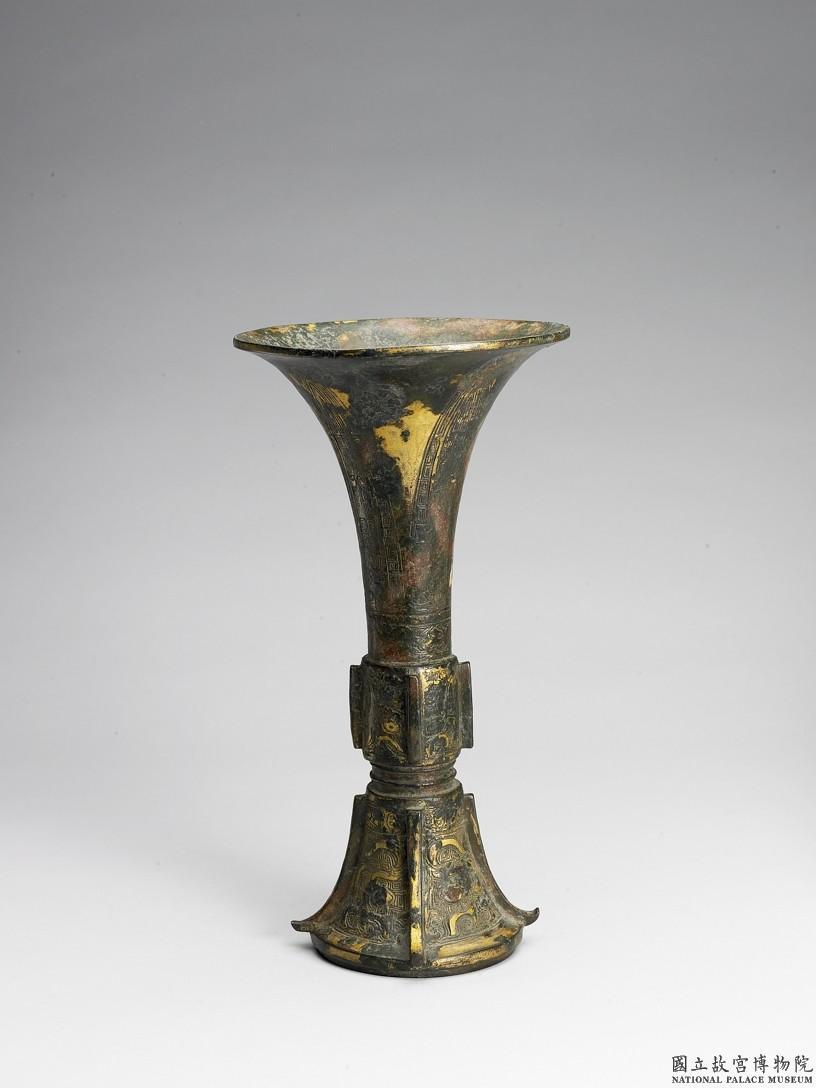
Lincoln said calling a tail a leg doesn't make it a leg — names don't change reality. Confucius would have disagreed. For him, calling a tail a leg does change something — not the tail itself, but how people think about legs. The more you call a tail a leg, the harder it becomes for people to recognize the value of a real leg.
That's what 6.25 is about. The 觚 is a specific bronze ritual vessel for drinking wine slowly and deliberately. Its form — tall, slender, with a trumpet-like mouth and a square base — was inseparable from its function. Round top for Heaven, square base for Earth. When the vessels people were calling 觚 no longer had the right shape or capacity, the name lost its power to remind drinkers of care and deliberation. And that erosion of meaning is what worried Confucius.
正名 — Rectifying Names
Confucius urged his students to 正名 — rectify names. If something inferior is being called by an honorable name, correct the inaccuracy. The 丹鉛錄 (Records of Cinnabar and Lead) warns that casually altering institutions, even small ones, was "the beginning of a slippery slope" — one that eventually led to 秦始皇 burning classical texts and imposing draconian laws.
The idea extends well beyond vessels. In passage 12.11, Confucius tells the Duke of 齊: "Let a ruler be a ruler, a minister be a minister, a father be a father, and a son be a son." These roles carry expectations — dignity, humanity, clarity — for important reasons. If a ruler doesn't have those qualities, they don't just fail; they do great damage. And if people start accepting that a ruler can be profane or vindictive, the name "ruler" loses the power to hold anyone to a standard.
Context and Connections
觚
A tall, slender bronze ritual wine vessel, deliberately difficult to drink from. According to Ming-dynasty sources, it held 2 升 — about 2-3 glasses. The 丹鉛錄 explains its cosmological symbolism: round top for Heaven, square base for Earth. By the 秦 and 漢 dynasties, some commentators confused it with faceted wooden writing slips also called 觚.
破觚為圓
"Breaking the 觚 to make it round" — a phrase from the 史記 describing how the 漢 dynasty softened the extreme policies of the 秦. An ironic inversion: Confucius used changes in the 觚 to warn against abandoning tradition, while 司馬遷 used changes in the 觚 as a metaphor for returning to humane practices.
Related Passages
- 12.11 — "Let a ruler be a ruler, a minister be a minister, a father be a father, and a son be a son" — the most famous expression of rectification of names
- 15.24 — "Do not impose upon others what you yourself do not desire" — a passage that means exactly what it says, unlike 6.25
Language Notes
觚
The character's left side is 角 (jiǎo, horn/corner), reflecting its angular shape. The 鹽鐵論 (Discourses on Salt and Iron) references the wooden-slip meaning rather than the vessel.
觚不觚 — A Noun Used as a Verb
The first 觚 is a noun (the subject). The second functions as a verb: "to be a proper 觚." Classical Chinese often uses nouns this way — as if we said "a chair that doesn't chair."
哉
An exclamatory particle adding a rhetorical, lamenting tone. 觚哉!— "What a 觚!" Compare with 乎哉 in passage 17.11 (see Episode 16).
不
The most common negative marker in both classical and modern Chinese. Other negatives in the Analects: 非, 弗, 莫.
正名
Rectify names. 正 means correct or upright. 名 means name. The compound carries Confucius's imperative that names must match the realities they describe.
升
A unit of volume, roughly 200 mL in the ancient system (modern 升 = 1 liter). A proper 觚 held 2 升 — about 400 mL.
破觚為圓
"Breaking the 觚 to make it round." 破 (break), 為 (to make/become), 圓 (round). A literary phrase from the 史記 describing the 漢 dynasty's return to moderation.