
Hiding Behind a Smile
On clever words, beautiful faces, and why the most charming people in the room might be the most dangerous.
The Passages
Hover over (or tap on mobile) Chinese characters for definitions. Use the 拼 button to toggle pinyin.
1.3
6.16
Informal interpretation:
And I'll tell you things that you already know
So you can say, "I really identify with you so much"
And all the time that you're needing me
Is just the time that I'm bleeding you
Don't you get it yet?
I'll come to you like an affliction
But I'll leave you like an addiction
You'll never forget me. You wanna know why?
'Cause I'm a liar.
— Rollins Band, "Liar" (1994)
These two passages are a warning about the most charming people in the room. Passage 1.3 sets the stage with a general rule — those whose words and manners aim to please are rarely human-hearted. Then 6.16 brings it to life with a lament about the real world, where Confucius names real people whose charm earned them power and influence that their character didn't deserve.
Philosophical Discussion
The Prettiest Poison
Passage 1.3 is one of the first things you read in the Analects, and it sets a tone for the entire book. Confucius says that people whose words are artful and whose manners aim to please are seldom human-hearted. It's a warning against surface-level charm — against mistaking someone's ability to make you feel good for evidence that they're actually good.
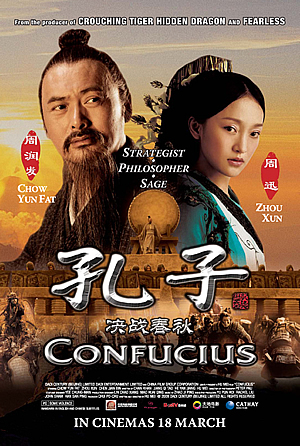
But passage 6.16 reveals that this wasn't just abstract philosophy. Confucius had specific people in mind. After being forced out of his home state of 魯 by the three powerful 三桓 families, Confucius spent over a decade traveling from state to state looking for a ruler who would govern according to his ideals. His first stop was the state of 衛, where he got a front-row seat to some serious debauchery, family feuds, and political intrigue — all centered around a smooth-talking priest and a devastatingly handsome prince.
Prince 朝 and the Love Triangle
Prince 朝 came from the nearby state of 宋. As a younger son of the ruling house, heading off to find his fortunes in another state was common — staying at home could even be dangerous for those not in line for the throne.
It was probably no coincidence that he ended up in 衛, because the Duke's wife 南子 was also from the ruling clan of 宋. What happened next was the talk of the region. Prince 朝's looks and manners completely enchanted Duke 靈 of 衛, who heaped titles, ranks, and a massive salary upon him. Meanwhile, Prince 朝 and the Duke's wife 南子 were carrying on an affair that everyone knew about. Commoners in their home state of 宋 mocked the Duke by singing, "Since he's already satisfied your sow, why don't you return our fine boar?"
But the Duke's infatuation was so deep that he was gleeful just to have Prince 朝 around, no matter what he did and no matter who mocked him. Eventually, the Crown Prince 蒯聵 became so scandalized by the love triangle that he plotted to assassinate 南子. He failed, fled to a neighboring state, and his son eventually became Duke — leading to a father-son war.
Priest 鮀 and the Power of Words
If Prince 朝 was the pretty face, Priest 鮀 was the silver tongue. He worked in 衛's ancestral temple, and his deep knowledge of the state's lineage made him invaluable.
At a summit convened by the hegemon state of 晉 to organize defense against the southern kingdom of 楚, an alliance was proposed and sealed with a blood pact. The order in which each leader swore the oath indicated their rank. Duke 靈 was furious to find 衛 placed after the smaller state of 蔡, so he ordered 鮀 to fix it.
Priest 鮀 unleashed a torrent of weaponized history. He traced 衛's founding to a loyal full brother of the 周 dynasty's founders, while 蔡 was founded by a rebellious brother who had been exiled. He listed every ceremonial chariot, bronze vessel, and musical instrument ever lavished on 衛 by the 周 kings. How could 晉 rank 衛 after 蔡 and still claim to honor the will of the ancient sage kings? It worked. 晉 moved 衛 ahead of 蔡.
Was it right? Who knows. The point is that Priest 鮀 won a victory not by force, not by doing what was right, but simply with his words.
Why Confucius Cared
Confucius eventually asked Duke 靈 for his advice on military tactics. Confucius knew the last thing this Duke should be doing was starting a war — someone who didn't even have the respect of his own countrymen couldn't hope to win the hearts of newly conquered people. So he told the Duke he was more of a specialist in ritual vessels and had never studied military tactics. The next day, he left 衛.
The lament at the end of 6.16 — "it sure is difficult to get by in today's world" — hits differently with this context. It wasn't jealousy. It was frustration. The world rewards the charming and the beautiful, and Confucius had spent fifteen years abroad trying to find someone who would pay attention to substance over style.
Context and Connections
佞 and 仁: Bizarro Twins
佞 (glibness) and 仁 (human-heartedness) share similar structures. 仁 combines a person element with the character for the number two — something "between two people." 佞 takes those same elements and adds 女 (woman). Where 仁 is about caring deeply for people, 佞 is about caring deeply for words. They're counterparts: one is real, the other is performance.
As discussed in Episode 8, passage 13.27 lists four qualities — resoluteness, grit, simplicity, and sincere speech — as prerequisites for 仁. Those are the opposite of 巧言令色: plain packaging, no surprises, exactly what it says on the tin. The connection between these episodes runs deep. Episode 8's "serving suggestion" disclaimer is the flip side of episode 12's "hiding behind a smile."
The Village Worthy Connection
In Episode 11, we met the Village Worthy — someone obsessed with being liked by everyone. The Village Worthy and the 巧言令色 person are closely related. Both fool others into thinking they know what morality looks like, and both dilute the real thing. The key difference: the Village Worthy uses moral performance, while the 巧言令色 person uses charm and flattery.
Related Passages
- 13.27 — Resoluteness, grit, simplicity, and sincere speech approach human-heartedness
- 17.13 — The village worthy is the thief of moral charisma
Language Notes
巧 (qiǎo)
Skillfulness or artfulness. In modern Chinese, 技巧 means skill or craftsmanship. But 巧 also has a pleasing, serendipitous quality — people say 太巧了 ("What a coincidence!") upon a fortunate occurrence. Here, the artfulness is applied to words, and it's not a compliment.
令 (lìng)
Often translated as "commanding," but commentaries say the meaning here is something that puts people at ease or makes them feel joy. The exact semantic shift from commanding to pleasing is unclear, but the sense is that 令色 describes a manner or appearance designed to charm.
色 (sè)
Appearance, countenance, or facial expression. Not "color" in this context, though that's the most common modern meaning. Here it refers to the outward presentation of oneself — the face you put on for others.
鮮 (xiǎn)
Third tone, meaning "rare" or "seldom." Don't let your modern Mandarin fool you — this does NOT mean "fresh" (that's first tone, xiān). This usage appears consistently throughout the Analects.
佞 (nìng)
Glibness, or being clever with words. As a pejorative, it means sycophantic or given to flattery. The character shares structural elements with 仁 but adds 女 — a kind of counterpart where 仁 focuses on caring for people, while 佞 focuses on manipulating with words.
祝 (zhù)
In modern Chinese, 祝 means to wish or bless, as in 祝你新年快樂 ("Wish you a happy new year"). In the title Priest 鮀, it indicates temple staff — someone who conducted rituals in the ancestral temple.
之 (zhī)
Repeated three times in 6.16, functioning as the classical equivalent of 的 — indicating possession or modification. 祝鮀之佞 is Priest Tuo's smooth talk; 宋朝之美 is Prince Chao's beauty; 今之世 is today's world.
難乎 (nán hū)
難 means difficult, as in modern Chinese. 乎 is a general preposition here meaning "to." When paired with the emphatic 矣 at the end of the passage, we get something like "it sure is difficult."
免於 (miǎn yú)
免 literally means to escape or avoid. 於 is a preposition meaning "from." Together they suggest survival — escaping from harm — rendered as "to get by."
今之世 (jīn zhī shì)
今 means now or the present, as in 今天 (today). 世 is an age or period of time, as in 世紀 (century). Together: "the present age" or "today's world."
矣 (yǐ)
A 虛詞 (classical grammatical particle) similar to 了 in modern Chinese. It adds emphasis to the end of a statement. Some translators render it with an exclamation point or turn it into "alas." Here it strengthens the entire lament: "it sure IS difficult."