Relative Dysfunction
On two states founded by brothers, two dukes who died in the same far-off kingdom, and the great synthesizer who refused to choose between the readings.
The Passage
Hover over (or tap on mobile) Chinese characters for definitions. Pinyin can be toggled in Settings.
Informal interpretation:
Seven characters call the states of 魯 and 衛 'brothers' — and leave you to figure out why. Were they alike because their founders were literal brothers in the early Zhou? Or because, by Confucius's day, both governments had collapsed into the same kind of dysfunction, each duke dying in exile in the same distant kingdom?
Philosophical Discussion
Two Readings of Seven Characters
Two readings dominate. The first comes from the Han-dynasty scholar 包咸 in the 1st century CE; the second from the great Song poet 蘇軾 — also known as 蘇東坡 — in the 11th century. They are not really mutually exclusive, and within a century the great synthesizer 朱熹 would staple them together. Since 朱熹's interpretations became canonical — memorized for the imperial examinations and transmitted to Europe through Matteo Ricci and James Legge — his reading of this line shaped how nearly everyone has read it since.
The Brothers (the 1st-century reading)
包咸's interpretation is the literal one: Lu was the fief of the Duke of Zhou; Wey was the fief of 康叔. The two men were brothers and were close, so the governments of their states were brotherly too.
The founding goes back centuries before Confucius. King Wu, the first Zhou king, died three years after conquering the Shang, leaving a teenage son, King Cheng. His uncle the Duke of Zhou served as regent and stabilizing force — fending off rebellions, resettling the conquered Shang, and formalizing the Mandate of Heaven (天命). The king and the Duke handed out enfeoffments to trusted relatives. Lu went to the Duke of Zhou's eldest son, 伯禽; Wey went to the youngest brother, 康叔.
The Founding Lineage
graph TD
    WEN["周文王
King Wen"]
    WEN --> WU["周武王 King Wu
(first Zhou king)"]
    WEN --> ZG["周公
Duke of Zhou"]
    WEN --> KS["康叔 Kang Shu
(youngest brother)"]
    WU --> CHENG["周成王
King Cheng"]
    ZG -. "regent for" .-> CHENG
    ZG --> BQ["伯禽 Bo Qin
(eldest son)"]
    BQ -- "enfeoffed in" --> LU["魯 State of Lu"]
    KS -- "enfeoffed in" --> WEI["衛 State of Wey"]
    LU -. "home state of" .-> KZ["孔子 Confucius"]
An 18th-century commentator backed this up from the Zuo Commentary (左傳), noting that the Duke of Zhou and 康叔 were the most harmonious of King Wu's eight brothers, and that their governing philosophies were compatible: 伯禽之政,親親尊尊 — 伯禽 governed Lu by "valuing kinship and honoring the venerable"; 康叔之政,明德慎罰 — 康叔 governed Wey by "illuminating virtue and being heedful in punishment."
Relative Dysfunction (the 11th-century reading)
蘇軾 read the passage darkly. By Confucius's day both states were brothers in chaos: in Wey "the father was no father and the son no son"; in Lu "the ruler was no ruler and the minister no minister." Both dukes ended up fleeing and dying in the distant southern kingdom of Yue (越). The line about fathers, sons, rulers, and ministers is a direct echo of passage 12.11 — Confucius's blueprint for good government as an extension of family roles.
Wey's broken father-son bond is the story from Episode 12. Duke Ling's wife 南子 carried on a public affair with the beautiful 宋朝; the crown prince 蒯聵 tried to kill her, failed, and fled into exile. When his son was installed as Duke Chu, 蒯聵 returned to seize the title he saw as his — a coup that killed Confucius's disciple 子路.
Wey: The 蒯聵 Succession Mess
graph TD
    DL["衛靈公 Duke Ling"]
    NZ["南子 Nanzi
(Duke Ling's wife)"]
    SC["宋朝 Prince Chao"]
    KK["蒯聵 Kuaikui
(crown prince)"]
    CHU["出公 Duke Chu
(Kuaikui's son)"]
    YUE["越 Kingdom of Yue"]
    ZL["子路 Zilu"]
    DL --- NZ
    NZ -- "public affair" --> SC
    KK -- "plots to kill, fails → exile" --> NZ
    NZ -- "installs as duke" --> CHU
    KK -- "returns, deposes (2 tries)" --> CHU
    KK -- "his coup kills" --> ZL
    CHU -- "ousted by his uncle, flees, dies in" --> YUE
Lu's "ruler who was no ruler" is the 三桓 — three families descended from Duke Huan who served as ministers but held the real wealth, walled cities, and armies. Duke Ai, the third generation of Lu rulers to try to claw power back, had no army of his own. He courted Yue as a military protector and won a secret betrothal to the crown prince's daughter — until the 三桓's spies discovered it and bribed Yue officials to call off the marriage and withdraw support. With no allies left, Duke Ai fled and died an exile in Yue, just like Duke Chu.
Lu: Duke Ai, the 三桓, and 越
graph TD
    HUAN["桓公 Duke Huan"] -- "descendants" --> SH["三桓 Three Families
nominal ministers, but hold
the wealth, cities, and armies"]
    SH -- "officially serve" --> AI["哀公 Duke Ai
(no army of his own)"]
    AI -- "courts as protector" --> YUE["越 Kingdom of Yue
(King Goujian 勾踐)"]
    YUE -- "grants land + secret betrothal" --> AI
    SH -- "spies discover it; bribe Yue
to cancel the marriage" --> YUE
    AI -- "backing gone → flees, dies in exile in" --> YUE
朱熹 the Synthesizer
朱熹 wrote that Lu and Wey were "originally brother states" that had both fallen "into decline and disorder," so "the Master sighed over them." Holding both readings at once looks obvious to us, but it was mildly radical. The 包咸 reading was a thousand years older and a thousand years closer to Confucius; the Han approach was to transmit received wisdom and draw an unbroken line back to the Master, which meant praising what he praised. By 蘇軾 and 朱熹's time the goal had shifted to the moral message — what the words revealed about Confucius's own heart. Living through the Song's loss of the north to the Jurchen Jin (金), 朱熹 had plenty of decline of his own to read into the line. He kept both interpretations — a reading preserved in his 集注, the Collected Commentaries on the Four Books that every examination candidate would later memorize.
Context and Connections
Brothers in Another Sense: Shang Loyalists
There is a third way Lu and Wey were brotherly that the commentaries skip. Both held large populations of loyalists from the conquered Shang. The old Shang capital sat inside Wey's borders, and the Zhou resettled members of the Shang royal clan there; other Shang clans, including artisans, were sent to Lu — possibly how Confucius's own family arrived. The two governing mottos fit this: Lu's "value kinship but honor authority" and Wey's "illuminate virtue, punish with restraint" both read as messages to a resident Shang population.
Why They Both Died in Yue
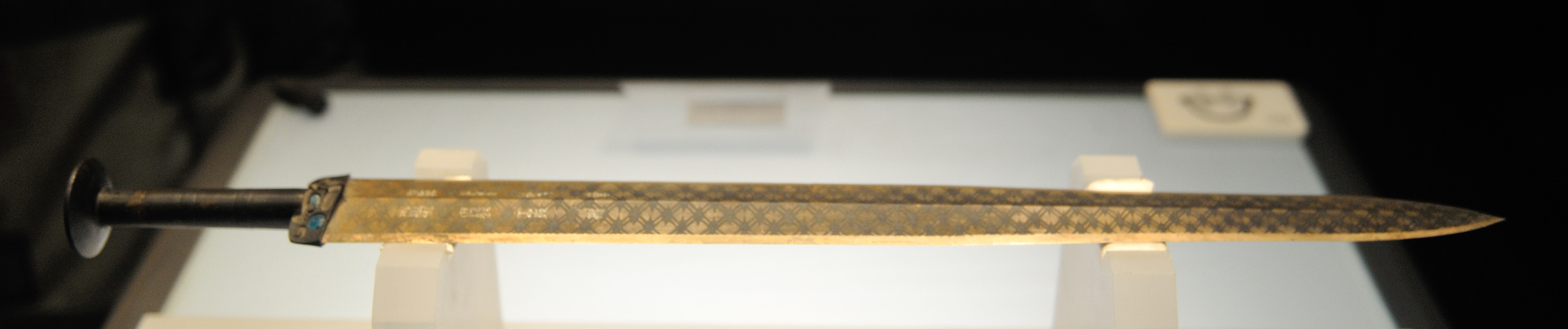
Yue (越) was never really a Zhou vassal — a southern confederation claiming descent from the semi-mythical 夏 dynasty, regarded by most Zhou states as half-barbaric. But under King 勾踐 it had just crushed the rival southern power 吳 to become the last hegemon of the Spring and Autumn period, so its military protection was worth courting — which is how both Duke Ai of Lu and Duke Chu of Wey ended their lives there. One of 勾踐's swords, named in the historical sources, was unearthed in 1965 still sharp and untarnished, and now sits in the 湖北 Provincial Museum.
Cast of Characters and Key Terms
The early Zhou founders
- 周 — the Zhou dynasty (1046–256 BCE), under which both states were founded
- 周文王 — King Wen, father of the brothers below
- 周武王 — King Wu, first Zhou king, conqueror of the Shang
- 周成王 — King Cheng, King Wu's teenage successor
- 周公 — the Duke of Zhou, King Wu's brother and regent for King Cheng; Lu's founding line ran through him
- 康叔 — youngest of the brothers, first lord of Wey
- 伯禽 — the Duke of Zhou's eldest son and first lord of Lu
- 天命 — the Mandate of Heaven, the doctrine the Duke of Zhou formalized
- 親親尊尊 — "valuing kinship and honoring the venerable," Lu's governing policy
- 明德慎罰 — "illuminating virtue, heedful in punishment," Wey's governing policy
The Spring and Autumn dysfunction
- 衛靈公 — Duke Ling of Wey
- 南子 — Duke Ling's wife
- 宋朝 — Prince Chao of Song, her lover
- 蒯聵 — the exiled crown prince of Wey
- 出公 — Duke Chu, the son of 蒯聵
- 三桓 — Lu's three power-holding ministerial families, descended from 桓公
- 桓公 — Duke Huan, the families' common ancestor
- 哀公 — Duke Ai of Lu
- 越 — the southern kingdom where both exiled dukes died
- 勾踐 — King of 越, last hegemon of the Spring and Autumn period
- 吳 — the rival southern power 越 destroyed to win hegemony
The commentators
- 包咸 — 1st-century Han scholar; the "brothers" reading
- 蘇軾 / 蘇東坡 — 11th-century Song poet; the "dysfunction" reading
- 朱熹 — 12th-century synthesizer who kept both readings
- 左傳 — the Zuo Commentary on the Spring and Autumn Annals
- 集注 — 朱熹's Collected Commentaries on the Four Books
Related Passages
- 12.11 — "Let the ruler be a ruler, the minister a minister, the father a father, the son a son" — the standard 蘇軾 invokes to call both states broken
- 6.16 / 1.3 — the Wey scandal of 南子 and 宋朝, covered in Episode 12
Language Notes
13.7 is a friendly place to start reading Classical Chinese — once you accept that learning the names of historical states like 魯 and 衛 is simply part of the territory, the way a French learner learns Paris and Marseille. These names recur constantly. One bonus: 魯 still rides on the license plates of 山東 province, shorthand for the region's culture and food.
衛 — and why it's spelled "Wey"
衛 is often romanized "Wey" rather than the standard Pinyin "Wei." The point is to distinguish this Spring and Autumn state from the later, far more powerful Warring States kingdom of 魏, which keeps the standard spelling.
之
The Classical equivalent of the modern possessive 的. 魯衛之政 is "the government of Lu and Wey" — literally "Lu-Wey 's government." Rendering it "politically" just avoids stacking prepositions in English.
政
Government or governance — the same 政 as in 政治 (politics) and 政府 (government) today.
兄弟 — and 也
兄弟 means "brothers," exactly as in modern Mandarin (兄 elder brother, 弟 younger brother). 也 is a sentence-final particle marking a judgment or comment. The passage states a topic up front — "the government of Lu and Wey" — and delivers the verdict at the end: "brothers."