A Pleasure to Have in Class
Four subjects, and only one a modern school would grade: how Confucius taught what can't be tested.
The Passage
Hover over (or tap on mobile) Chinese characters for definitions. Pinyin can be toggled in Settings.
Eight characters: the Master taught four things, 文, 行, 忠 and 信. The first two are a curriculum any school would recognize. The last two are qualities no examination can measure, and how Confucius taught them, and why the list runs in this order, is what the commentators have argued about ever since.
Philosophical Discussion
Two taught, two modeled
文, culture, and 行, conduct, are a curriculum: things a student studies and drills, as schools still do in the humanities classroom and on the playing field. 忠 and 信, commitment and credibility, are what a school expects a student to bring, and a modern school measures and enforces them through attendance, grades and the rules against plagiarism. Confucius had no such instruments and would not have wanted them: a student who attends only to avoid failing stops the moment no one takes the roll. So on the reading argued here, culture and conduct were taught, while commitment and credibility were modeled, then judged rather than scored.
文: the arrow and its feathers
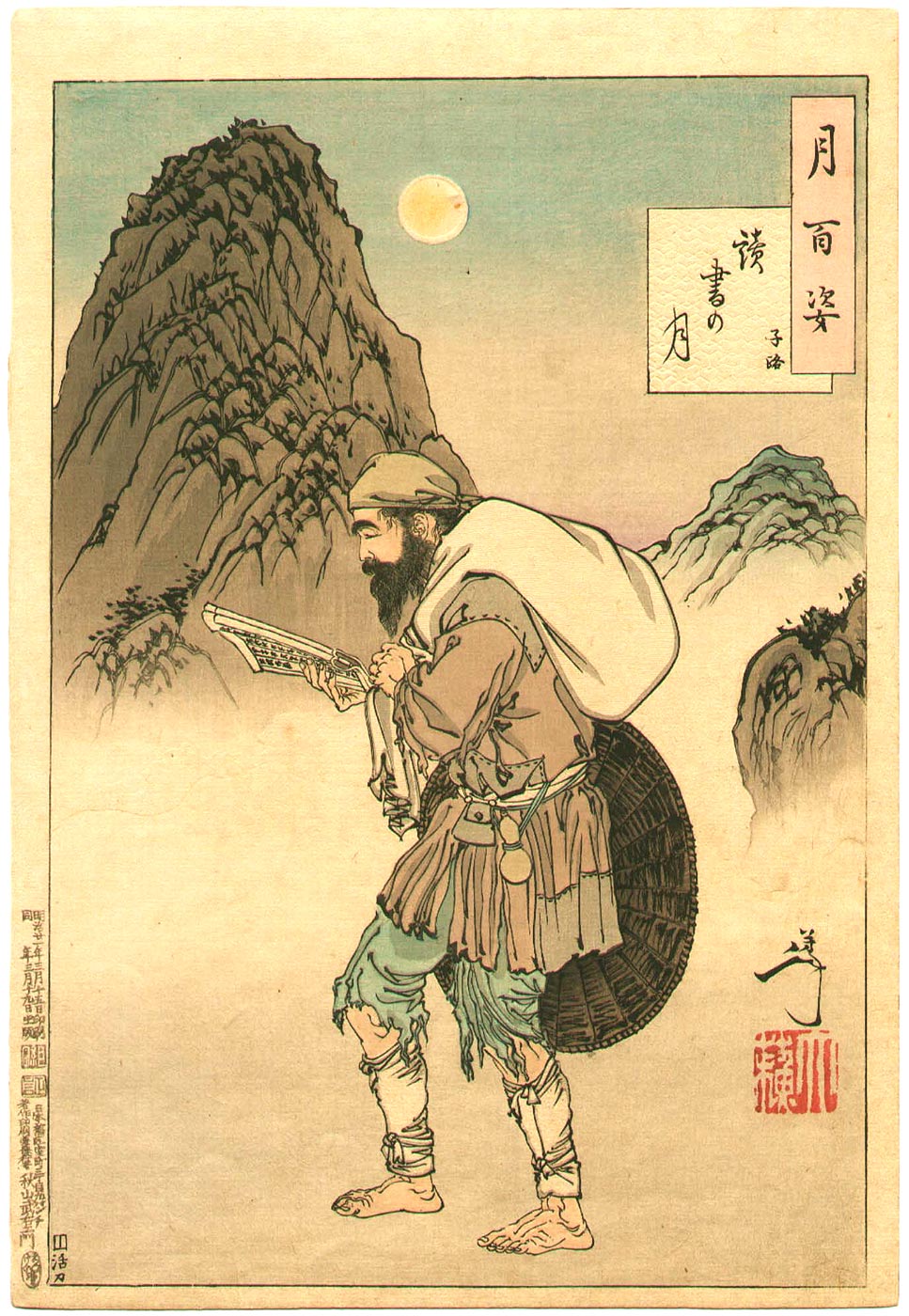
文 meant the Odes, the Documents and the 六藝, the six arts of rites, music, archery, charioteering, writing and arithmetic. Its practical end was office: it gave a student the references that the officials he would serve took for granted.
Its great beneficiary was 子路, the group's warrior, introduced in Episode 9. He came from 卞 in the backwoods of 魯, a 野人 rather than a 國人 of the walled town. In the 孔子家語, compiled five to seven centuries after the Analects, he meets Confucius in a rooster-feather cap and a boar-hide sheath, and argues that bamboo from South Mountain, cut for an arrow, pierces rhinoceros hide without any study. Confucius asks whether it would not go deeper fletched and tipped with iron. 子路 took a scholar's robes, became a disciple and won office in 衛, where he died in 480 BCE in the coup that put 蒯聵 on the throne, the end of the succession struggle traced in Episode 20. When a halberd cut his cap strings, he stopped to retie them: 君子死,冠不免, "a gentleman may die, but does not lose his cap."
行: from the household outward
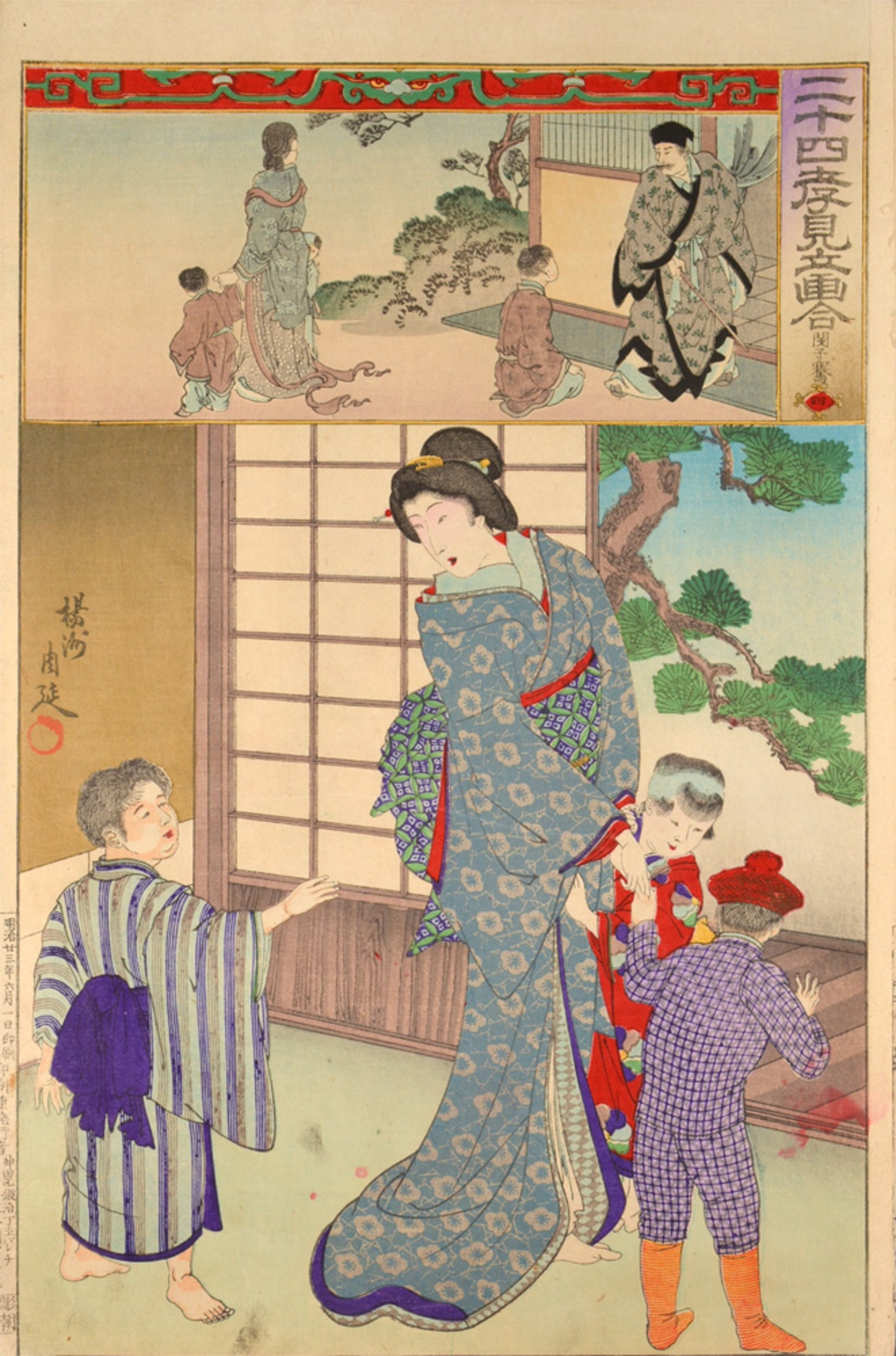
Conduct is the team or the orchestra: drill that becomes judgment. It began at home, with sweeping, greeting parents and walking behind elders, and widened to court manners, receiving guests, serving as an envoy, remonstrating gently with parents and honestly with rulers, and mourning that could last three years. Students who mastered it went on to run noble households.
The Analects' exemplar is 閔子騫, praised in 11.5. The Yuan-dynasty Twenty-Four Filial Exemplars (二十四孝) adds a story that is probably invented but still to the point: a stepmother who lined her own sons' coats with silk and his with reed catkins, and his plea when his father would have sent her away. "With mother here, one son is cold. With mother gone, three sons are left alone."
Grading what can't be graded
Commitment and credibility Confucius taught by example: serving to the utmost long after leaving office, knowing it could not be done and doing it anyway (14.38), never claiming knowledge he lacked (2.17). It took. 子路 became a man who never let a promise sit overnight, 子路無宿諾, and whose word a nobleman defecting from 小邾 would accept in place of a sworn covenant.
Then he watched, over years. Credibility came first. He once trusted people to do what they said, until 宰予晝寢, the eloquent student asleep at midday; after that he watched what they did. Commitment came second, and effort had to be aimed at the right thing. 冉求 worked hard for the 季氏, squeezing taxes out of the people for a house already 富於周公, richer than the Duke of Zhou, and Confucius disowned him (11.17). These were not grades. They were verdicts.
Context and Connections
Another list
Like the lists in Episode 18 (7.13) and Episode 19 (7.21), 7.25 opens with a short description of the Master, but it concerns what he handed on rather than his own demeanor. It follows 7.24, where he tells his students he hides nothing from them: 吾無隱乎爾.
Taught, or taught with?
以 usually means "with" or "by means of." Peimin Ni reads it literally, "The Master taught with four things," so the four are his own qualities, taught by being displayed, a reading that suits 7.24. Traditional commentators stop short of that. 李充, quoted in 皇侃's subcommentary, makes them instruments applied to the student: culture draws him out of ignorance, conduct builds his virtue, commitment gives him backbone, credibility carries him to the end. Most simply call them subjects, as in 程頤's paraphrase in 朱熹's commentary: study culture, cultivate conduct, keep commitment and credibility. The episode splits the difference.
Why culture comes first here
1.6 puts conduct first and study last, 行有餘力,則以學文, the reverse of 7.25. 何焯's 義門讀書記 sees two stages: elementary learning puts conduct first, which is 1.6, and advanced learning puts culture first, which is 7.25. 金履祥, writing as the Song fell, defends 7.25's order step by step in his 論語集注考證. Learning exists for doing, so conduct follows it. Both can be faked, so commitment, which lives wholly inside, comes next. And since the sincere can still fail to follow through, credibility closes the list by turning the inner quality back outward.
The episode's own reading: the list runs from concrete to abstract, and from easiest to teach and test to hardest. Culture can be recited and conduct drilled; commitment and credibility are proven only over time, as in 9.28: 歲寒,然後知松柏之後彫也, only when the year turns cold do you learn that pine and cypress are the last to lose their leaves. 1.6 orders by priority, 7.25 by teachability.
Four, or three?
忠 and 信 nearly always travel as a pair. 李充 divides them by relationship, what a subject owes his ruler and what one owes a friend, a division that goes back to 1.4: 為人謀而不忠乎?與朋友交而不信乎? 程頤 calls them the root, one measured inside oneself and one out in the world. 王若虛 objects that they are only two kinds of conduct, and concludes, strikingly for a Confucian, that the fault lies with the disciples who recorded the list, and that a doubt should be left open rather than forced.
An argument about human nature
For Mencius goodness is a seed already in us, so teaching starts with the heart. For 荀子, the philosopher of ritual from Episode 24, our nature is warped wood clamped straight from outside, so teaching starts with the texts and the rules. 7.25's order is 荀子's; 程頤, calling commitment and credibility the root, reads Mencius's order into it. The argument over four characters is an argument about human nature.
Who's who
- 子路 — 542–480 BCE, the most martial of the disciples; died in the Wey coup of 480 BCE
- 閔子騫 — disciple praised for filial piety (11.5)
- 宰予 — also called 宰我, the disciple listed for eloquence in 11.3 and caught asleep in 5.10
- 冉求 — also called 冉有, steward of the 季氏 (11.17)
- Peimin Ni — translator of the Analects (2017) who reads 以 as "with"
- 李充 — 4th-century CE Eastern Jin scholar and keeper of the imperial library, who fixed the four-part order of Chinese bibliography: classics, histories, masters, collections
- 皇侃 — 488–545, whose subcommentary preserves 李充's remarks
- 程頤 — 1033–1107, Northern Song philosopher, quoted on this passage by 朱熹
- 何焯 — 1661–1722, Qing scholar and textual critic
- 金履祥 — 1232–1303, scholar of the Song–Yuan transition, author of a textual study of 朱熹's commentary
- 王若虛 — 1174–1243, scholar-official of the Jurchen Jin, a sceptical reader of the classics and their commentators
- 荀子 — 3rd-century BCE Confucian who held that human nature must be shaped from outside
Related passages
- 7.13, 7.21 — the two earlier lists in Book 7, in episodes 18 and 19
- 7.24 — "I hide nothing from you": the passage just before this one
- 1.6 — study culture with whatever strength is left over: the reverse order
- 1.4 — Master Zeng's three daily questions, pairing commitment with service and credibility with friends
- 9.28 — the pine and cypress in the cold of the year
- 12.12 — 子路 never let a promise sit overnight
- 5.10 — 宰予 asleep in the daytime, and Confucius learning to watch conduct
- 11.17 — 冉求 disowned for enriching the 季氏
- 11.5 — Confucius on 閔子騫's filial piety
Language Notes
7.25 — 子以四教:文,行,忠,信
The Master — by means of — four — taught: culture, conduct, commitment, credibility.
- 子 — Confucius, by the honorific the Analects uses throughout: the Master.
- 以 — the coverb "with, by means of," one of at least five uses the book gives it (all of them on the 以 page). How to read it depends on 教. Take 教 as the verb and 以 is "with," as in Ni's "taught with four things"; take it as a noun, a teaching, and 以 becomes the verb "to use": the Master used four teachings. Four of the eight translators give it no word ("taught four things"), and Ames & Rosemont and Lau make it a heading: "under four categories," "under four heads." The same "by means of" survives in modern 所以, "therefore," literally "that by which."
- 四 — four, then and now.
- 教 — to teach; as a noun, a teaching. The received reading is jiào, from the Middle Chinese departing tone, but tone did not distinguish the noun from the verb here, so the reading settles nothing.
- 文 — often "cultural refinement" (Slingerland), or "culture" with a word added, to mark it as a virtue cultivated rather than a subject studied. Legge has "letters" and Roberts "texts."
- 行 — likewise "proper conduct" (Ames & Rosemont) or "moral conduct" (Lau). The plain sense is action, as in modern 行為, behavior.
- 忠 — the renderings scatter: Legge "devotion of soul," Lau and Chin "doing one's best," Watson "loyalty," Ni "wholehearted devotion," Slingerland "dutifulness," Ames & Rosemont "doing one's utmost," and Roberts, once my professor, "commitment."
- 信 — Legge "truthfulness," Lau "being trustworthy in what one says," Ames & Rosemont "making good on one's word," Slingerland, Ni, Watson and Chin "trustworthiness," Roberts "trust." "Credibility" owes something to the alliteration, but not everything: modern Mandarin keeps the word in 相信, to believe, and 信用卡, a credit card.